Tag: guitar

Songwriters Spotlight – Harry Glasson

Welcome to the latest in the series of weekly blog posts about songwriting, which includes interviews with composers and artists about their views and experiences in this field. This week’s interview is with Cornish singer-songwriter Harry Glasson, who has written an incredible wealth of songs.


Matt:

What is your background in songwriting and performing?


Harry:

I made an acoustic guitar in woodwork class at school, it was not great but it played. I joined the Merchant Navy and took the Guitar with me and swapped it for a transistor radio on leaving my first ship. A couple of years later I met and worked with a lad who has become a lifelong friend and fellow singer/songwriter Jonathon Ryan. He already had a Guitar so I got me one too, an EKO as I remember, like playing a railway sleeper with strings on. We performed at parties and later at the local pub and the performing just sort of grew from there.


Matt:

Everyone has different reasons for writing songs, sometimes to express themselves, to tell a story etc. What drives you to write a song and where do you get your inspiration from?


Harry:

From as far back as I can remember I have loved to read and as a kid I read anything and everything. I grew up the eldest of a family of eight my father was mainly on agricultural wages and liked a drink, so buying books, even borrowing books was not easy. So, I wrote things, little bits and pieces and enjoyed condensing these stories down into poems and eventually songs. Living here in Cornwall it is not difficult to get inspired as we have the history, the beauty, legend and culture at a fingers touch. The men have dug underground here since at least Roman times for the tin and copper. Sailors have navigated our miles of coastline, including the smuggling of contraband. We have the standing stones, stone circles and the villages of prehistory. The legends of King Arthur, Merlin, giants and piskys, all set in wonderful rugged landscape. Who can fail to be inspired?

Matt:

There are often differing views about songs, both on what the most important aspect is and what the most difficult element of a song to compose is. What do you think is the most important part of a song and do you struggle with a particular stage of composing?


Harry:

I think the most important part of a song is getting it real, truthful and as accurate as possible. I have usually found that the initial lines drawn from inspiration come easily, the hard work is fleshing out the story around them within the confines of the arrangement.


Matt:

You’ve composed a large collection of Folk songs about Cornwall, which have been performed and adopted by many artists, both Cornish and wider-a-field, including The Harry Glasson Project organised by Will Keating. It feels like these songs have become a significant part of Cornwall’s musical heritage. Where do you feel Cornish Folk music and perhaps Folk music in general is heading towards?


Harry:

I think it was Woody Guthrie who said, “as long as there are disasters, wrong doings and a man wants to woo a woman, there will always be folk music” and I do believe he was right. There has been a big resurgence in pub singing here in Cornwall this last few years which is a form of Folk music. Pub singing, people with a glass in hand singing unconducted, usually in three-part harmony. For some reason my songs have appealed to this form of singing especially and has carried over to the Guitar playing folk singing in the clubs. The Cornish music scene is vibrant these days.


Matt:

What projects and compositions are you working on at the moment?


Harry:

At the moment I am working on putting a song book together, it is in its infancy but a good start has been made. Will Keating is planning a new album for next year so we are getting together on that one too, some new material has been created but needs some honing and no release date has been set.


You can learn more about Harry’s beautiful songs by joining the Facebook page Harry (Safari) Glasson’s Music where you can see other musicians performing his songs and chat about his lyrics. His songs are also currently being performed by singer-songwriter Will Keating, who you can learn more about by visiting his website and Facebook page.

Songwriters Spotlight – Lunacci

(Main image photo by Lauren Norris)


Welcome to the latest in the series of weekly blog posts about songwriting, which includes interviews with composers and artists about their views and experiences in this field. This week’s interview is with songwriter, performer and composer Lunacci (pronounced loo-nah-see).


Matt:

What is your background in songwriting and performing?


Lunacci:

I started writing songs at the age of about 6 years old, I had a copy of Sony Acid 2.0 (some old music software), and I used to just drag the pre-recorded loops around…. it sounded terrible, but I learnt a lot about song writing at a young age because of it. I guess my first ‘performances’ came through church. I started playing drums with the church band from the age of 11. I think it taught me a lot about band etiquette and musical sensitivity.

(Photo by Lauren Norris)


Matt:

Everyone has different reasons for writing songs, sometimes to express themselves, to tell a story etc. What drives you to write a song and where do you get your inspiration from?


Lunacci:

I’m driven by the need to express myself, which I don’t pretend is anything unique. I think we all need outlets to express ourselves, and they can take many different forms, but mine is music and lyrics. Probably unsurprisingly, my biggest inspiration are the people I interact with. Sometimes I write about people that I meet for just a few fleeting moments, but 90% of my songs are about my friends.


Matt:

There are often differing views about songs, both on what the most important aspect is and what the most difficult element of a song to compose is. What do you think is the most important part of a song and do you struggle with a particular stage of composing?


Lunacci:

I think the most important part of a song is how it makes the listener feel, which is weirdly often overlooked. I see a lot of bands and musicians making music that is ‘cool’ or ‘well-written’ but having either little or the wrong emotional impact. Most of my music is very simple, I don’t pretend it’s anything fancy, but I do think it’s pretty clear how it’s meant to make you feel.


(Photo by Chris Trevena)

Matt:

In addition to your performances as Lunacci, you’ve done several different musical projects in the last few years, including composing cinematic music and session work. What have been the good and bad moments of these and how have your different experiences influenced your songwriting?


Lunacci:

I do work on other projects, most of the time they are entirely different, but sometimes they interlink… I once used an instrumental version of one of my Lunacci songs for a documentary.


Matt:

You started your Lunacci performances as a solo act but in the last few years you’ve developed into a band (named Lunacci + The Lunatics). Has this expanded the possibilities for your compositions and what projects are you currently working on?


Lunacci:

Yeah, I had always planned on expanding into a band, so it was nice when that happened. Working with a collective of musicians means there is a lot more potential for more complex musicality, I think that’s something I’m still discovering. Currently we’ve let things have a little bit of a rest, we had a manic past few years and all the gigs over the summer really tired me out. I’m using the time to write new material so that things will feel nice and fresh come the new year.


You can learn more about Lunacci + The Lunatics and their music by visiting their website at www.lunacci.co.uk and Facebook, Twitter and YouTube pages. Their music is available to listen to and purchase on many digital music platforms, including Spotify and CDBaby

Songwriters Spotlight – Elliott Ferguson

Welcome to the latest in the series of weekly blog posts about songwriting, which includes interviews with composers and artists about their views and experiences in this field. This weeks interview is with singer-songwriter Elliott Ferguson, the current President of the Falmouth University Songwriter’s Society.


Matt:

What is your background in songwriting and performing?


Elliott:

I started writing my own music when I was around 16, my main influence was Avicii and I wrote a lot of stuff which didn’t match up to my ability to play so I would appear on songs with a friend. It was only after I wrote Down in Belfast after my grandfather died that I got into songwriting fully as it’s a great release and I love to do it. The first proper gig I had was last September at a Jacobs Ladder open mic which was where I met Ryan Wheeler and some of the guys from Red Van Records.


Matt:

Everyone has different reasons for writing songs, sometimes to express themselves, to tell a story etc. What drives you to write a song and where do you get your inspiration from?


Elliott:

I get most of my inspiration from personal experiences, sometimes they can be exaggerated to tell a story but I try and be as honest as possible with the majority of songs I write. The experiences are both good and bad ones; be it relationships and grief or having fun with my mates. I believe every song should tell a story. It’s part of my identity and I try to show who I am through my music.

Matt:

There are often differing views about songs, both on what the most important aspect is and what the most difficult element of a song to compose is. What do you think is the most important part of a song and do you struggle with a particular stage of composing?


Elliott:

I’d say the most important part of a song is its story and the message you want to say with it. I often find it difficult when I know the story and what I want to say but I can’t make it coherent. You can really want to write a song and finish it that day but sometimes you have to wait and sit with the idea to be able to deliver it in the right way.


Matt:

You’re currently the President of the Falmouth University Songwriter’s Society. How has running this society affected your songwriting and what advice can you give other songwriters?


Elliott:

Running the society hasn’t really affected my songwriting at all, it’s just a bit more responsibility but my committee are all fantastic so there isn’t really any pressure. Some advice I would give would be to remain true to yourself and make the music that you want to make; be open to criticism and take it on board, it can help but don’t be overruled by it. Everyone has different tastes so it doesn’t matter if one person doesn’t like your music. That’s something I’ve had to teach myself.

Matt:

What projects are you currently working on and where can we find out more?


Elliott:

I’m currently working on writing my next EP, but I’ve also got a music video for ‘Addicted to the Ocean’ in the works and I’m super excited about it! Any new announcements are posted on my social media


You can learn more about Elliott and his music by visiting his Instagram, Facebook and Twitter pages and can listen and purchase his EP “Helicopter Leaves” at Spotify, iTunes and YouTube. You can learn more about the Falmouth University Songwriter’s Society by visiting their Facebook page

Songwriters Spotlight – Suphena

Welcome to the latest in the series of weekly blog posts about songwriting, which includes interviews with composers and artists about their views and experiences in this field. This week’s interview is with singer-songwriter Suphena.

Matt:

What is your background in songwriting and performing?

Suphena:

I started performing very early on in the school choir from about the age of 9. I suppose a lot of kids do that sort of thing but then when I reached high school I continued to study music and perform in school concerts. At the age of 18 I bought my first guitar and started learning songs that I liked from YouTube and used the chords I learnt as a basis to write my own songs. I never really finished a lot of songs but the ones I did finish I would play at open mic nights and busk on the streets in Leeds, my hometown, until I realised I wanted to study music at University. This is where I really honed in on my craft and got to a place where my songwriting felt more mature, because I was forced to think more about what I was writing and why.

Matt:

Everyone has different reasons for writing songs, sometimes to express themselves, to tell a story etc. What drives you to write a song and where do you get your inspiration from?

Suphena:

A lot of the time what drives me to write is feeling negative about something, maybe regarding a relationship or a societal issue. In order to process those complex emotions I create music so as to not become destructive. Whatever music I am listening to at the time inspires what I write, but generally Reggae music and Jazz singers are influences which are engrained in me. Right now, I’m listening to lots of Techno and Hip-Hop, so the new EP I am working on will definitely have elements of that creeping in. Also, my Jamaican heritage drives and inspires me too. I’ve always felt somewhat disconnected from that part of myself and when I sing I am reminded of those roots and that plays a big part in my overall identity.

Matt:

It’s really interesting that you use music to express your feelings and emotions, as a lot of other musicians I have spoken to have said they also use it as an outlet. Most art forms seem to be able to be used for expression but music seems to be especially able to do this. I personally can also very much relate to you being influenced by different styles and genres, as I have my Folk side as my main basing but have also been influenced by Pop, EDM and cinematic music. There are often differing views about songs, both on what the most important aspect is and what the most difficult element of a song to compose is. What do you think is the most important part of a song and is there a particular stage of composing that you struggle with?

Suphena:

The most important part of a song to me is the meaning and making sure the music reflects that meaning. Having a clear understanding of what I’m trying to say is first and foremost. If you don’t have a clear message then listeners won’t be able to relate. The most difficult aspect of songwriting for me (at this point in my journey anyway) is structuring. Sometimes I like to stray away from standard Pop structures to make my music more interesting, but then if I stray too far it can become confused and not make sense, so finding a balance can be difficult. I suppose that also has something to do with not wanting to be confined to the genre of pop, too.

Matt:

You mentioned earlier that you are working on an EP, can you tell us more about that and any other projects you’re working on at the moment?

Suphena:

Yeah, I’m in the midst of reworking some older songs of mine and the EP will just showcase what I’ve done so far. It’s the first solo release of mine so I’m very excited! It’s just a stripped back version of my songs with me and my guitar. Another project I’m working on is an EP release and UK tour with my band, Horses on the Beach. And for part of my degree I am working on a techno track, which is really random but challenging!

You can learn more about Suphena and her music by visiting her Facebook, Instagram and SoundCloud pages

Songwriters Spotlight – Jack Ferry

(Main image photo by @facialcavity)


Welcome to the latest in the series of weekly blog posts about songwriting, which includes interviews with composers and artists about their views and experiences in this field. This week’s interview is with singer-songwriter and multi-instrumentalist Jack Ferry.


Matt:

What is your background in songwriting and performing?


Jack:

Well, I’ve been playing in bands for ages now, since I was about 11 now, I think? I started playing keyboards for a band called “No Tributes” that basically did nothing, before playing with a load of other bands with terrible names. Here are my favourite terrible names:

  • To Kill A Thunderbird
  • Shatter Resistant
  • 60 Decisions
  • Coldshoulder
  • Blunderbuss
  • The Restless Kings
  • Jessica Rabbit and The Hillbillies

I think the first song I ever wrote was a song called “Mr. E”, which I still think was a very clever name for a song, even if the execution wasn’t as good as I’d like. I’d always made up songs and little poems and ditties and things like that, but when I was 13 or 14 I got really serious about it. I wrote a couple of songs back then that are still in my set to this day, but my first big and good song was my song “I Don’t Know What I’m Doing With My Life”, which I eventually recorded. I’ve rewritten it since, but it still rings true to me. Since then, I’ve written loads and loads of songs; some good, quite a few stinkers, but I’ve always got something to say when it’s put to a tune.


Matt:

Everyone has different reasons for writing songs, sometimes to express themselves, to tell a story etc. What drives you to write a song and where do you get your inspiration from?


Jack:

Honestly, it just sort of happens? If I’m angry about something, or I need to say something, a song helps. But you know, crying publicly is something I’m not very good at, which is where a song comes in. It’s really just an excuse for me to be upset or angry or happy or wistful or whatever really, but very loudly.

Honestly, I think I just like shouting but I’m very shy. Most of my songs come from relationships with people, I don’t really write about things in the news or current events or anything. I think the closest I’ve ever come to that is a song I wrote called “2012” about the idea of the Mayan Apocalypse and how the end of the world didn’t really change anything about the way we interact with each other. But even then, that was very internal and about regrets. I think that if you’re writing about someone or something else, you really are writing about yourself – or how that reflects on yourself

(photo by Denise Ashwin)

Matt:

One thing that has been mentioned by songwriters since this blog series has started has been that they use writing songs to express feelings and emotions that they would struggle to otherwise, so your comments on this are really interesting. I know you play several different instruments, which one(s) do you particularly like writing songs with and what do you think makes them so effective?


Jack:

They all kind of make me write in different ways, I kind of am drawn to the stereotypical songs that you associate with the instruments when I write. When I write on the banjo or the accordion, they always come out more folky. I always seem to talk about nature on the songs I play banjo on, like in my song “Thirty One-Years”, I start talking about yew trees and poison ivy, and using old fashioned words like “sepulchre” and “mausoleum”. Piano gets me all sad and wistful and emotional. Guitar is a wildcard – could be a folky ballad, could be a mid-tempo rocker. Bass always ends up funky. Saxophone always goes ballady and jazzy.

You know, the banjo is actually an instrument from West Africa. But because of the contexts we hear the banjo in, it’s always a southern American folk instrument to us. It’s really difficult to unlearn this and loads of bands I love have managed to do it – They Might Be Giants with the accordion, and X-Ray Spex with the sax – but I’m still working on it. All my accordion songs are probably going to sound like depressing sea shanties for a while.


Matt:

There are often differing views about songs, both on what the most important aspect is and what the most difficult element of a song to compose is. What do you think is the most important part of a song and do you struggle with a particular stage of composing?


Jack:

I struggle with the whole thing! It’s proper difficult! The hardest part when you’re a songwriter is just getting started really. There’s always a worry that I’m not going to write anything as good as I have done in the past. That it’s going to be hacky and not as clever as the stuff I’ve written before. How can I say what I want to say, without just SAYING it? And then outside of just writing lyrics, I always betray myself by not letting myself just pick easy chords. It’s like, there’s millions of FANTASTIC songs that are just I-VI-IV-V, it’s not giving up to just do that, but obviously after you go through three years of music school and learning about arrangements, re-harmonisation, and how to step out of your comfort zone, and all of a sudden I-VI-IV-V is a cowards way out! But really it isn’t. Chords are really just the bones of the songs – as long as they aren’t broken, the song’s going to be fine.

I find the feeling of the song is the most important thing to capture, and it’s the hardest as well. This is why I find myself writing sad lyrics to really upbeat melodies and chord sequences, it’s almost like saying “I’m only pretending to be happy, this is how I feel, but I’m an adult and I have to lie!!!” But then you can’t write a love song to a funeral march and mean it – unless you’re really trying to say that your love is dead. Maybe someone else could. I really just try to create the right ambience, like a host at the w****est dinner party of all time.

(photo by Izaak Spencer)

Matt:

You’ve not only formed several bands, you’ve also played in other musician’s bands as well. Having experience of both “worlds”, what do you enjoy and dislike about both and what projects are you currently working on?


Jack:

Oh, I love being a side-man, y’know? I love having the opportunity to play around in someone else’s world, step into somewhere I normally wouldn’t. Last year, I played bass for a country band called Jasper and The Island and it just gave me a whole new understanding of the bass and how I interact with it, and how I interact with a band setting. It’s nice to not have to be the most entertaining person on stage as well, just for a bit. Don’t get me wrong, I need the attention, but stepping back from time to time is very much needed.

At the moment, I’m working on my first solo album with my brilliant band. I’m also playing keyboards, accordion, saxophone, penny whistle, and backing vocals for William Grant. I’m trying to keep as busy as I can with music at the moment, graduate life is a killer.


You can learn more about Jack and his music by visiting his website at www.jackferrythemusician.com/music and Facebook page. His EP “Polite Pop” is available to listen to and purchase on many digital music platforms, including Spotify, Amazon, iTunes and Bandcamp

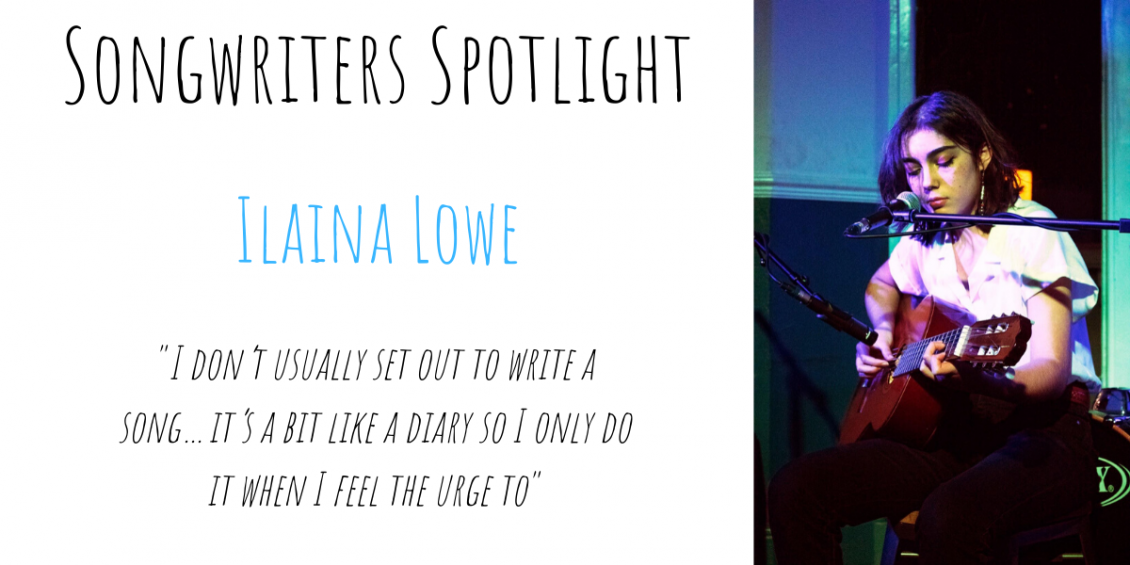
Songwriters Spotlight – Ilaina Lowe

Welcome to the first in a series of weekly blog posts about songwriting, which will include interviews with composers and artists about their views and experiences in this field. This weeks interview is with singer-songwriter Ilaina Lowe, former President of the Falmouth University Songwriter’s Society.

Matt:

What is your background in songwriting and performing?

Ilaina:

My family are all performers of some kind or another, musicians and artists, most of them aren’t professional or anything but we’ve always had a family-wide love of singing, music and theatre and so in a way, at home, I’ve been performing my whole life. I always imagined myself as a performer, but most of my performing was always done at home, usually in front of a mirror haha. When I was a bit older I started busking in my hometown but I didn’t touch songwriting until I was at least 17/18. Since coming to Uni I‘ve really branched out, I joined the musical theatre society and am a committee member for the songwriters society for a second year. To sum up – I don’t think I really have a background in songwriting? I think I’m living my background right now because I’m still quite new at it and I’ve never had any formal lessons

Matt:

Everyone has different reasons for writing songs, sometimes to express themselves, to tell a story etc. What drives you to write a song and where do you get your inspiration from?

Ilaina:

As a kid if I was upset – I’ve been told that I didn’t cry much, I used to just go make up songs to make myself feel better. Fast forward to when I started songwriting, I find that I write best when I’m sad, maybe because I don’t really feel the need to write when I’m not but that’s why all of my songs are kind of depressing- I’d say they’re kind of like a diary, though these days I tend to push the writing a bit further away from myself since I do record them and share them with people- they don’t all need to know what I’m thinking when I’m sad ahha

Matt:

It’s really interesting that you use songs and songwriting to help express feelings and emotions, I’ve often felt that is a massive benefit of being an artist. You’re currently studying at Falmouth University for a degree in animation and visual effects, which is also a really creative artform. Do you feel that both your animation and musical sides influence each other?

Ilaina:

I’ve often felt like I can explain things much more easily with visuals than words, and I think that does apply to my writing, just in the way that I like describing things? I wouldn’t say they influence each other massively but if I directed and animated a music video for myself then definitely they would affect each other

Matt:

There are often differing views about songs, both on what the most important aspect is and what the most difficult element of a song to compose is. What do you think is the most important part of a song and do you struggle with a particular stage of composing?

Ilaina:

I think all the components are important- but honestly, I struggle with all of them haha. But what I find most hard is not knowing enough finger-picking patterns and chords, I want to be inventive but I find it difficult. I think melody is the part that is easiest for me, even then, I find that the melody is often held back by not having great chords.

Matt:

Well most Pop songs are written with the same four chords, so anything additional that you learn and use in your songs can expand the possible music you can make in an amazing way. I think when you’re a musician you are always trying to learn new things and it’s really exciting when you are able to bring that into a new piece. You’ve been president of the Falmouth University Songwriting Society last year and are involved in the committee this year. How has this impacted your songwriting and what other projects are you working on at the moment?

Ilaina:

I think being part of the committee has really improved my songwriting, just because I was part of a team that had to come up with the prompts and ideas to bring the best out of our society members, it made me think more deeply about what you can do with songwriting and brought me out of my box in terms of theme and style. Of course with every year at Uni I become less prolific just because of coursework, but even with that it means that what I do come out with is usually a bit higher in quality, in my own humble opinion haha. I’m not working on much at the moment, just because I don’t usually set out to write a song, like I said earlier, it’s a bit like a diary so I only do it when I feel the urge to – but I do plan to use songwriters society as a chance to give myself a space for being creative musically every week – even when my course gets busy

You can learn more about Ilaina and her music by visiting her SoundCloud and Instagram (@planet_slons) pages. You can learn more about the Falmouth University Songwriter’s Society by visiting their Facebook page

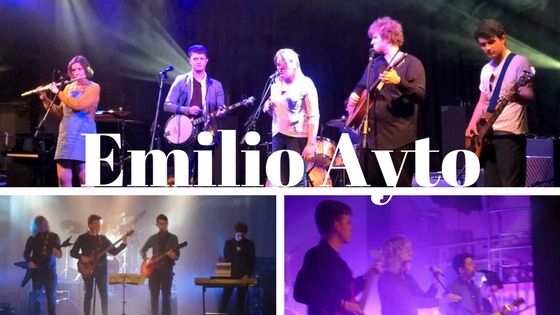
QP Artist’s Spotlight – Emilio Ayto


Hello there! My name is Emilio Ayto and I’m an English Guitarist, Composer, and multi-instrumentalist. I have been based in South-West Cornwall for most of my life, despite being born in Banbury, Oxfordshire.

I first started playing Classical Guitar at Secondary School under the guidance of tutors Ben Salfield and Rick Martin, but gradually began to play Electric Guitar and Electric Bass in school bands, productions, ensembles; and also singing in the school choir.
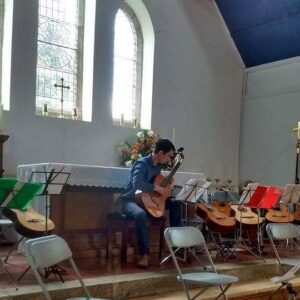
Since 2015 I’ve been learning to play an 8 course tenor Lute, and more recently a 5 string tenor Banjo and also a 12 string Guitar. Since September 2016 I’ve been studying BA Hons Music at Falmouth University, Cornwall. In this time I have been taught by Guitar tutor Douglas McClure at the university. During just the first few months I composed my first piece for solo Classical Guitar titled “Red River”, performing it at my debut solo concert in March 2017 at the weekly AMATA lunchtime concert series. In May 2017 I recorded a four track demo, which will soon be available to download for free on online music stores. This summer I am set to perform my first solo festival date in August 2017, at “Hellys International Guitar Festival” in Helston, Cornwall.
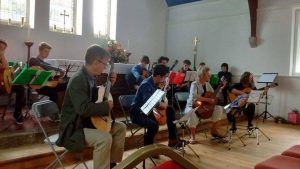
Currently I regularly participate in both the Falmouth University Guitar Ensemble, but also in the Cornwall Youth Classical Guitar Ensemble. I also play lead Electric Guitar and joint lead vocals in rock band Rogue Nation (founding member since September 2015), Electric Bass Guitar and backing vocals in acoustic folk rock band Another Coffee Please (founding member since February 2017), Electric Bass Guitar in Lunacci’s backing band, and Classical Guitar in The Faure Quartet (since May 2017).

Despite this wide variety of performing in different scenarios, my primary instrument has always been the Classical Guitar. My most recent repertoire includes Classical Guitar standards such as “Asturias” and “Cavatina”, the works of Francisco Tarrega, Spanish Guitar, South American Guitar, and also Guitar arrangements of popular songs (currently including Mason Williams, Pink Floyd, Carlos Santana, and many others). However, I have also been adding to my Classical Guitar repertoire with my own original compositions; drawing upon a wide variety of influences from Classical, Rock, Minimalism, Renaissance, Folk, and Blues genres.


That’s all folks, thanks for reading, and a big thank you to Matthew Woolley (aka The Quantum Penguin) for asking me to do this on his new blog!


(To find out more about Emilio Ayto visit his YouTube Channel at www.youtube.com/channel/UCiLbeN6E6eSKjpGI8aaObUQ)